

When someone passes away, settling their estate can involve numerous legal, financial, and administrative responsibilities. Understanding the duties of a probate executor in Washington State can help families navigate the process with greater confidence.
A probate executor, commonly referred to as a Personal Representative in Washington State, is responsible for administering a deceased person’s estate. These responsibilities may include identifying and protecting estate assets, notifying creditors, addressing valid debts, maintaining financial records, and distributing property to beneficiaries according to the will and applicable Washington law.
When an estate includes real estate, additional responsibilities may arise. A Personal Representative may need to secure and maintain a home, determine its market value, coordinate repairs, and decide whether selling the property is appropriate. The authority to sell property and any required approvals depend on the circumstances of the estate.
Micheal Smith and Lydia Graham are Managing Brokers with Windermere Real Estate Lake Tapps, Inc. and Certified Probate Real Estate Specialists (CPRES). We help Personal Representatives, Executors, Trustees, and families navigate the real estate portion of estate administration.
Our services include property evaluations, preparing inherited homes for sale, coordinating trusted vendors, developing marketing strategies, and guiding families through the real estate transaction. We work alongside probate attorneys and other professionals to help simplify the process and reduce unnecessary stress.
We proudly serve families throughout King and Pierce Counties, including Auburn, Lake Tapps, Bonney Lake, Tacoma, Puyallup, and Federal Way. Our goal is to provide knowledgeable guidance and personalized service during an often challenging time.
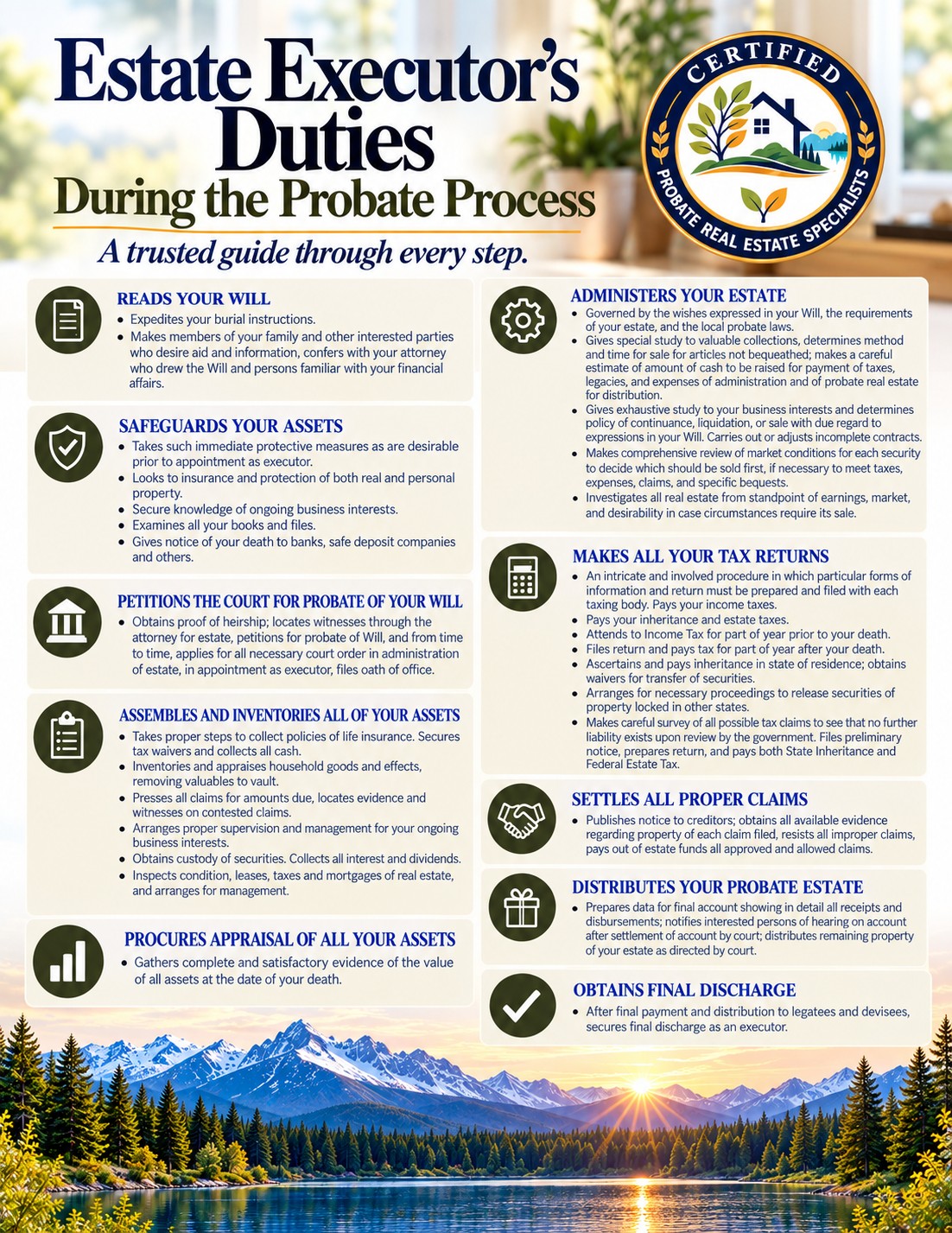
Duties of a Probate Executor in Washington State
Understanding the duties of a probate executor in Washington State is important for anyone responsible for settling a loved one’s estate. In Washington, the person appointed by the court to administer an estate is generally called the Personal Representative.
The Personal Representative has a fiduciary responsibility to act in the best interests of the estate and its beneficiaries while following applicable Washington State probate laws.
1. Locate the Will and Begin Probate
One of the first responsibilities is locating the deceased person’s will and determining whether probate proceedings are necessary.
If probate is required, a petition is generally filed with the appropriate Washington Superior Court to request the appointment of a Personal Representative.
2. Identify and Protect Estate Assets
The Personal Representative is responsible for identifying, securing, and managing estate property. Assets may include:
- Residential homes and other real estate
- Bank accounts and investments
- Vehicles and personal belongings
- Business interests
- Other assets belonging to the estate
Estate property should be protected from unnecessary loss, damage, or deterioration during administration.
3. Prepare an Inventory of Estate Property
Washington law generally requires a Personal Representative to prepare an inventory and appraisement of estate property within three months of appointment, unless additional time is allowed.
When real estate is involved, obtaining a professional property valuation can help establish its market value and assist with decisions about retaining or selling the property.
4. Notify Creditors and Address Estate Debts
A Personal Representative must address valid creditor claims and estate obligations.
Washington has specific creditor notification procedures and deadlines. When proper notice is published, many creditor claims must be submitted within four months after the first publication, although different deadlines may apply.
A probate attorney can help determine which requirements apply to a particular estate.
5. Maintain and Manage Estate Real Estate
When an estate includes a home or other property, the Personal Representative may need to:
- Secure vacant property and maintain insurance
- Arrange necessary repairs or maintenance
- Coordinate cleaning and removal of personal belongings
- Obtain an accurate market evaluation
- Determine whether selling the property is appropriate
- Work with qualified real estate professionals
The Personal Representative’s authority to sell estate property depends on the circumstances of the probate and any applicable court requirements.
6. Sell Estate Property When Appropriate
Selling inherited real estate can be one of the most significant responsibilities involved in estate administration.
Micheal Smith and Lydia Graham, Certified Probate Real Estate Specialists and Managing Brokers with Windermere Real Estate Lake Tapps, Inc., assist families with evaluating property, coordinating vendors, preparing homes for sale, establishing competitive pricing, and marketing probate real estate.
We work alongside probate attorneys and other estate professionals to help Personal Representatives make informed decisions throughout the sale.
7. Distribute Assets and Complete the Estate
After applicable debts, expenses, taxes, and legal requirements have been addressed, the Personal Representative oversees the distribution of remaining estate assets to the appropriate beneficiaries.
The procedures for completing and closing probate depend on the circumstances of the estate.
How We Help Washington State Probate Executors
Serving King and Pierce Counties, Micheal Smith and Lydia Graham provide personalized real estate guidance for Personal Representatives, Executors, Trustees, and families.
Whether an inherited home needs repairs, an estate requires a property valuation, or a Personal Representative is preparing to sell real estate, our goal is to help simplify the process and reduce stress.
We serve Auburn, Lake Tapps, Bonney Lake, Tacoma, Puyallup, Federal Way, and surrounding communities.
Additional Washington State Probate Resources
For more information about probate procedures, court requirements, and estate administration, visit the Washington State Courts website. A qualified Washington probate attorney can explain the specific legal responsibilities and deadlines that apply to your estate.
This information is provided for educational purposes only and is not legal or tax advice. Consult a qualified Washington probate attorney regarding your specific circumstances.
