

Preparing an estate inventory is an important part of probate in Washington State. It helps the Personal Representative identify, organize, and value the assets of someone who has passed away.
An inventory may include real estate, bank accounts, investments, vehicles, and personal belongings. Having accurate information helps families make informed decisions and manage estate responsibilities.
If the estate includes a home or other real estate, Micheal Smith and Lydia Graham can help with property valuations, preparing homes for sale, and coordinating the real estate process.
We are Certified Probate Real Estate Specialists (CPRES) and Managing Brokers with Windermere Real Estate Lake Tapps, Inc. We serve families throughout King and Pierce Counties, including Auburn, Lake Tapps, Bonney Lake, Tacoma, Puyallup, and Federal Way.
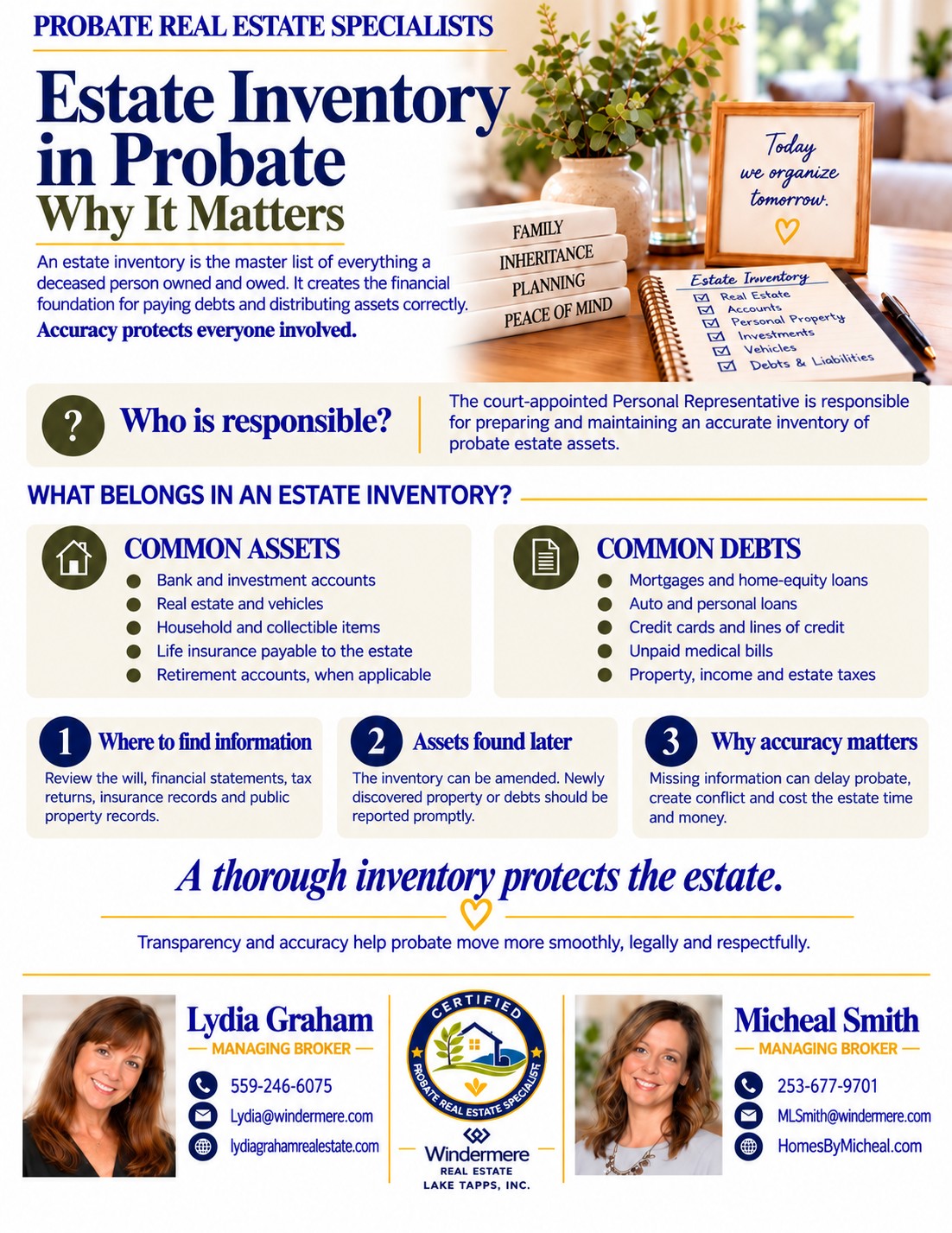
Understanding the Washington State Probate Estate Inventory
A probate estate inventory is a detailed record of the assets belonging to a deceased person’s probate estate.
The Personal Representative is responsible for preparing this inventory. It helps establish the estate’s value, identify property that needs protection, and guide decisions about managing or selling assets.
What Assets Should Be Included in a Probate Estate Inventory?
Depending on the circumstances, an estate inventory may include:
- Real estate, including homes, vacant land, and rental properties
- Bank accounts and cash
- Stocks, bonds, and other investments
- Vehicles, boats, and recreational vehicles
- Furniture, jewelry, antiques, and personal belongings
- Business interests and other valuable assets
Not every asset automatically becomes part of the probate estate. For example, some jointly owned property, trust assets, and accounts with designated beneficiaries may transfer outside probate.
A Washington probate attorney can help determine which assets belong in the inventory.
How Is Real Estate Valued During Probate?
Real estate is often one of the most valuable assets in an estate.
Under Washington law, the inventory generally uses the property’s value as of the date of death, accounting for secured debts and liens.
A real estate professional can provide a comparative market analysis to help estimate market value. A qualified appraisal may also be needed to establish a date-of-death value or satisfy legal or tax requirements.
Accurate property valuations help Personal Representatives make informed decisions about retaining, transferring, or selling estate real estate.
Does Washington State Have an Estate Inventory Deadline?
Yes. Under RCW 11.44.015, a Personal Representative generally must prepare and verify an inventory and appraisal within three months of appointment, unless the court grants additional time.
The inventory does not ordinarily have to be filed with the probate court. However, a copy must be provided within ten days when properly requested by certain eligible parties.
A probate attorney can explain the requirements for your particular estate.
Can You Sell a House During Probate in Washington State?
Yes. A home can often be sold during probate, but the process depends on the Personal Representative’s legal authority and the circumstances of the estate.
A Personal Representative with nonintervention powers may generally sell estate real estate without additional court approval, subject to applicable legal restrictions. Other estates may require court involvement.
Before listing an inherited home, it is important to understand its value, condition, ownership, and any outstanding mortgages or liens.
Micheal Smith and Lydia Graham help families evaluate their real estate options, develop pricing strategies, coordinate property preparation, and market estate homes when a sale is appropriate.
We work alongside probate attorneys and other professionals to help make the real estate process easier to manage.
What Happens After the Estate Inventory Is Completed?
After the inventory is prepared, the Personal Representative can continue administering the estate.
This may include protecting property, addressing debts, communicating with beneficiaries, and deciding whether real estate should be retained, transferred, or sold.
If a home needs to be sold, careful preparation and pricing can help protect the estate’s financial interests.
How We Help With Probate Real Estate
Managing an estate can feel overwhelming, especially when a home or other property is involved.
As Certified Probate Real Estate Specialists and Managing Brokers, Micheal Smith and Lydia Graham provide real estate guidance to Executors, Trustees, Personal Representatives, and families throughout King and Pierce Counties.
Our services include:
- Evaluating inherited homes and estate property
- Preparing comparative market analyses
- Helping families understand current real estate market conditions
- Coordinating repairs, cleaning, and property preparation
- Connecting families with trusted service providers
- Marketing and selling estate real estate
- Working alongside probate attorneys and other professionals
Our goal is to simplify the real estate portion of probate while treating every family with care and respect.
Frequently Asked Questions About Washington Probate Estate Inventories
What Is Included in a Probate Estate Inventory in Washington State?
A probate inventory generally includes assets owned by the deceased person that are subject to probate. These may include homes, bank accounts, investments, vehicles, and personal belongings.
The inventory identifies the assets and their values, including applicable secured debts or liens.
How Detailed Does a Probate Estate Inventory Need to Be?
The inventory must provide enough information to accurately identify and value estate assets.
Washington law requires real estate to be identified by its legal description. Other assets should be described clearly enough to identify them.
A probate attorney can explain what documentation may be needed.
Does an Inherited Home Need to Be Included in the Inventory?
Generally, yes, if the home is part of the probate estate.
However, property held in a trust, owned with certain survivorship rights, or transferred through another nonprobate arrangement may not be included.
What If Additional Estate Assets Are Discovered Later?
If additional property is discovered after the original inventory is prepared, the Personal Representative may need to prepare an additional inventory.
A probate attorney can advise on the appropriate steps.
Do I Need to Sell an Inherited House During Probate?
Not necessarily. Depending on the estate, the property may be retained, transferred to beneficiaries, or sold.
The best option depends on the estate’s obligations, the wishes and rights of interested parties, and the Personal Representative’s legal authority.
Need Help With Inherited Real Estate?
Whether you are preparing an estate inventory, evaluating an inherited home, or considering selling estate property, we are here to help.
Micheal Smith and Lydia Graham offer knowledgeable, compassionate real estate assistance to families throughout King and Pierce Counties.
Contact us for a no-obligation conversation about your probate real estate needs.
Additional Washington State Probate Resources
For additional information about Washington State probate estate inventory requirements and court procedures, visit the Washington State Courts website. A qualified Washington probate attorney can also explain the inventory requirements and deadlines that apply to your estate.
This information is for educational purposes and does not constitute legal or tax advice. Consult a qualified Washington probate attorney or tax professional regarding your specific circumstances.
